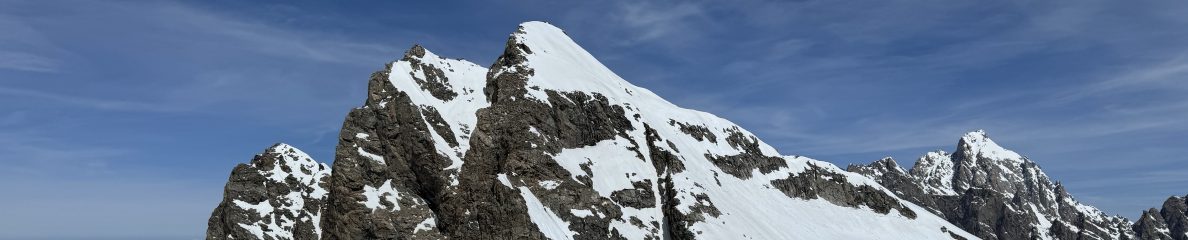

The first time I ever went up to Garnet Canyon, I was perplexed by the continuous perfect gash of black rock on the Middle Teton. Something about it seems “unnatural”; like a machine skimmed a sliver of granite off the surface of the mountain.
As I turned more confident in my climbing ability throughout the summer season, this geologic enigma turned into a potential line to explore. I did some research and found it was a 5.6. After a summer full of 5.5 solos and even a few 5.7-5.8 multis, an attempt this route felt like a proper capstone to my summer of climbing.
I packed my bag with some extra pieces of gear that I typically don’t solo with; rock shoes, chalk, a rope, ATC, a sling harness plus slings for anchors, all just in case the route was too much and I needed to bail. In hindsight I regret carrying the rope; the weight was not worth the insurance. I can harp on that later in this post.
After packing my bag for the day I began with a proper “alpineaxle” start around 11:30am. I made quick work of the garnet switchbacks, running every step to the maze, and hiking in the rest. The base of the route is easy to find; it’s where the black dike is.
Once at the dike I slipped on my rock shoes and chalk, and started pulling up. The first few pitches were perfect; Flat foot-width platforms and positive edges which progressively got tighter as the route went up. Lots of flow.
This section is easy 5th, and doesn’t feel like much until you get to a short “crux” overhang. Marked by an old bolt. This is where it sets in that the exposure is far and real. Where slipping first felt impossible, now feels like there’d be no return if you did. Not to overdramatize the route or anything, it’s just that the progressive difficulty culminating to the point crux was very interesting, like that metaphor where you can slowly boil a frog and it wouldn’t notice.

Right above the “crux” is some standing room before moving on to the final pitch of the route. This pitch is very much vertical, with large blocky holds. Most of the rock appears “detached” and at first glance seems hard to trust, but they are locked in fr. One person described this pitch as “glued together by the rock climbing gods”, which is about as accurate as it gets. I considered this the crux of the route, as the moves were a little more awkward and spread out, and it required sound route-finding to stay out of trouble. Topping out this pitch is mostly home-free, with about 2k-ish vert of 3rd/4th/easy 5th class to the top of Dike Pinnacle.
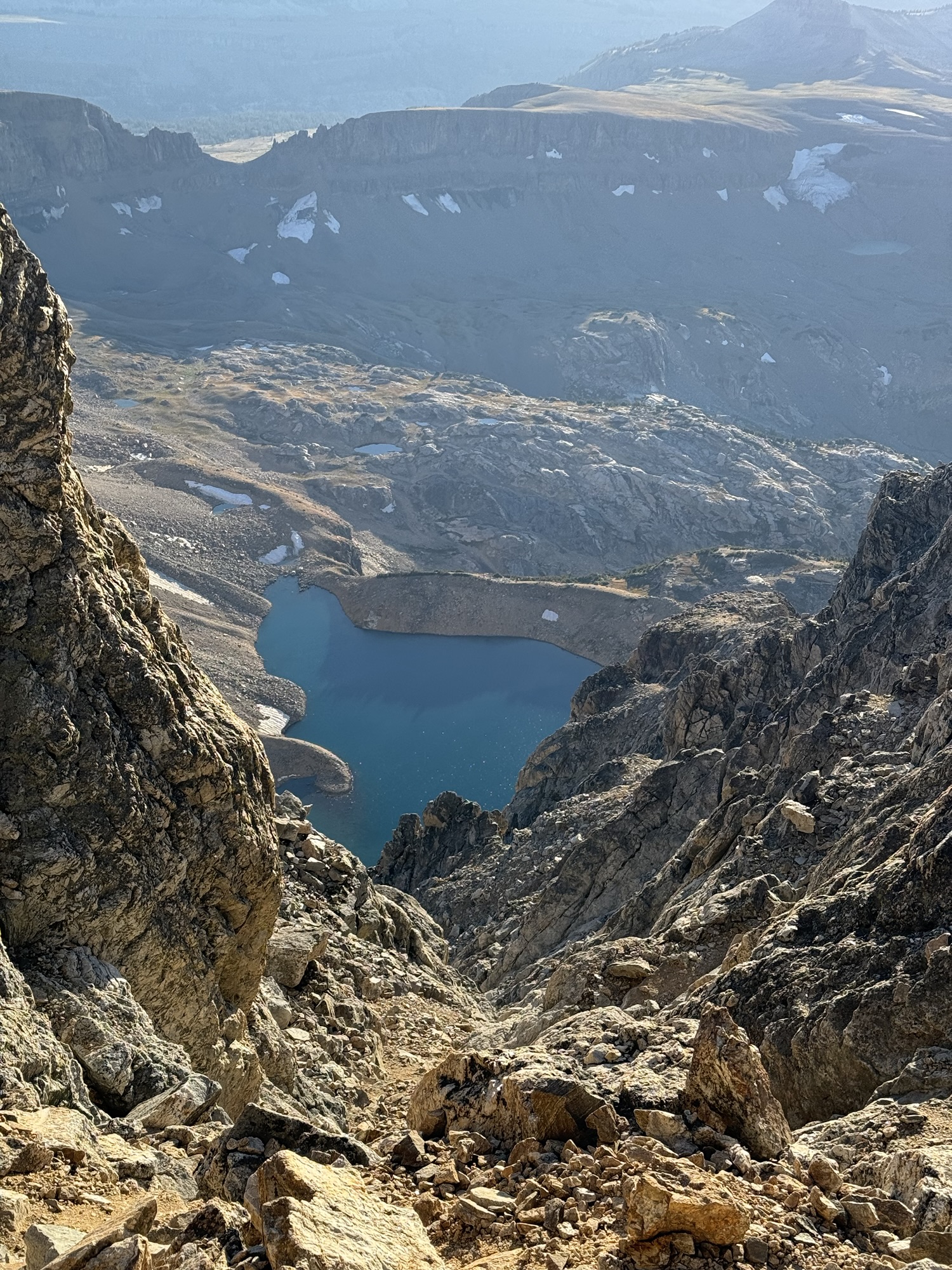
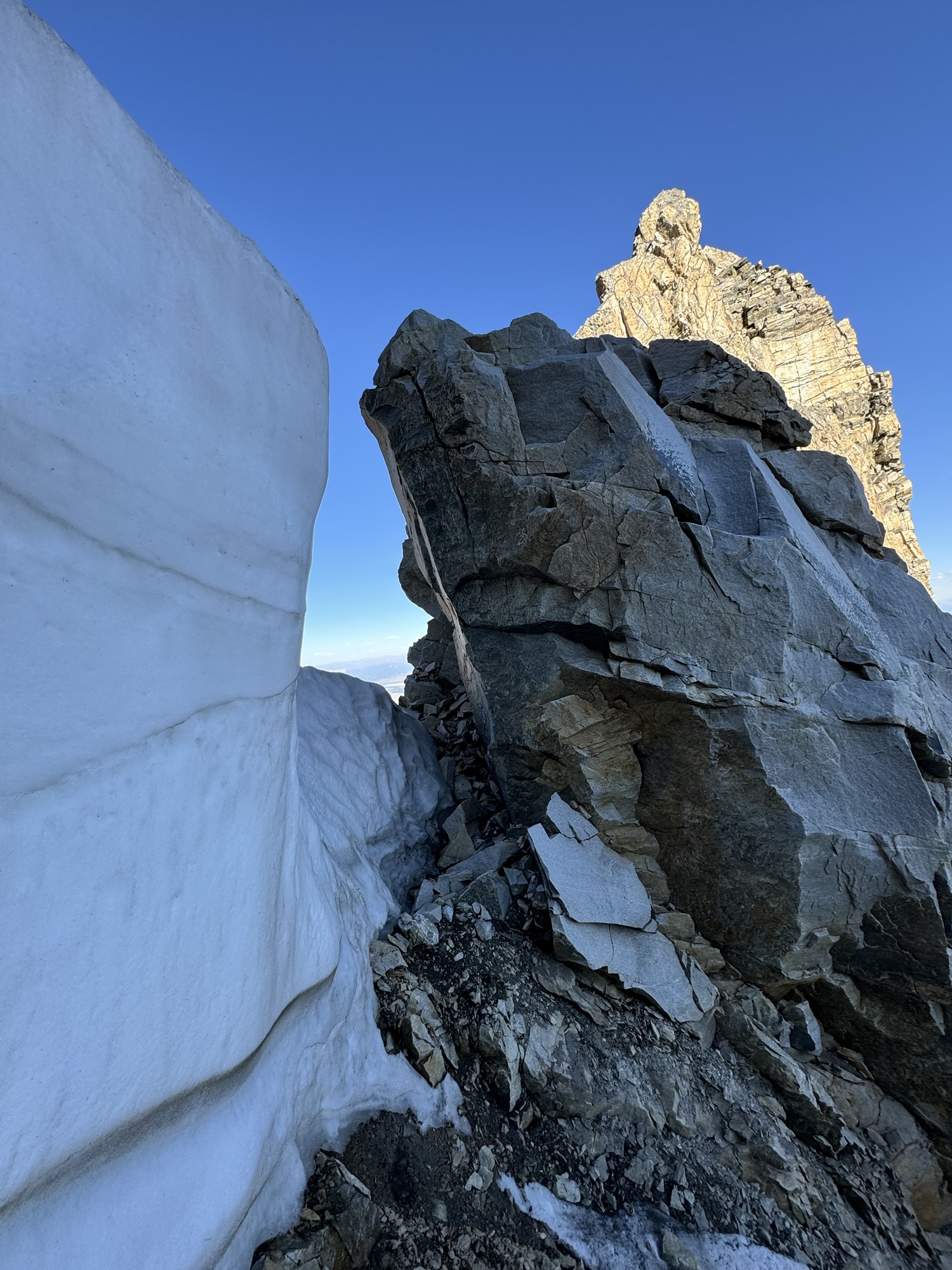
From the top of the Dike Pinnacle, it seems most roped parties climb down and traverse around the right of the fin that separates the pinnacle from the East Face of the Middle. Personally I could not see a path I felt comfortable soloing. Instead, I dropped slightly into the Ellingwood Couloir (maybe 100ish feet), around and back up to the base of the East Face.
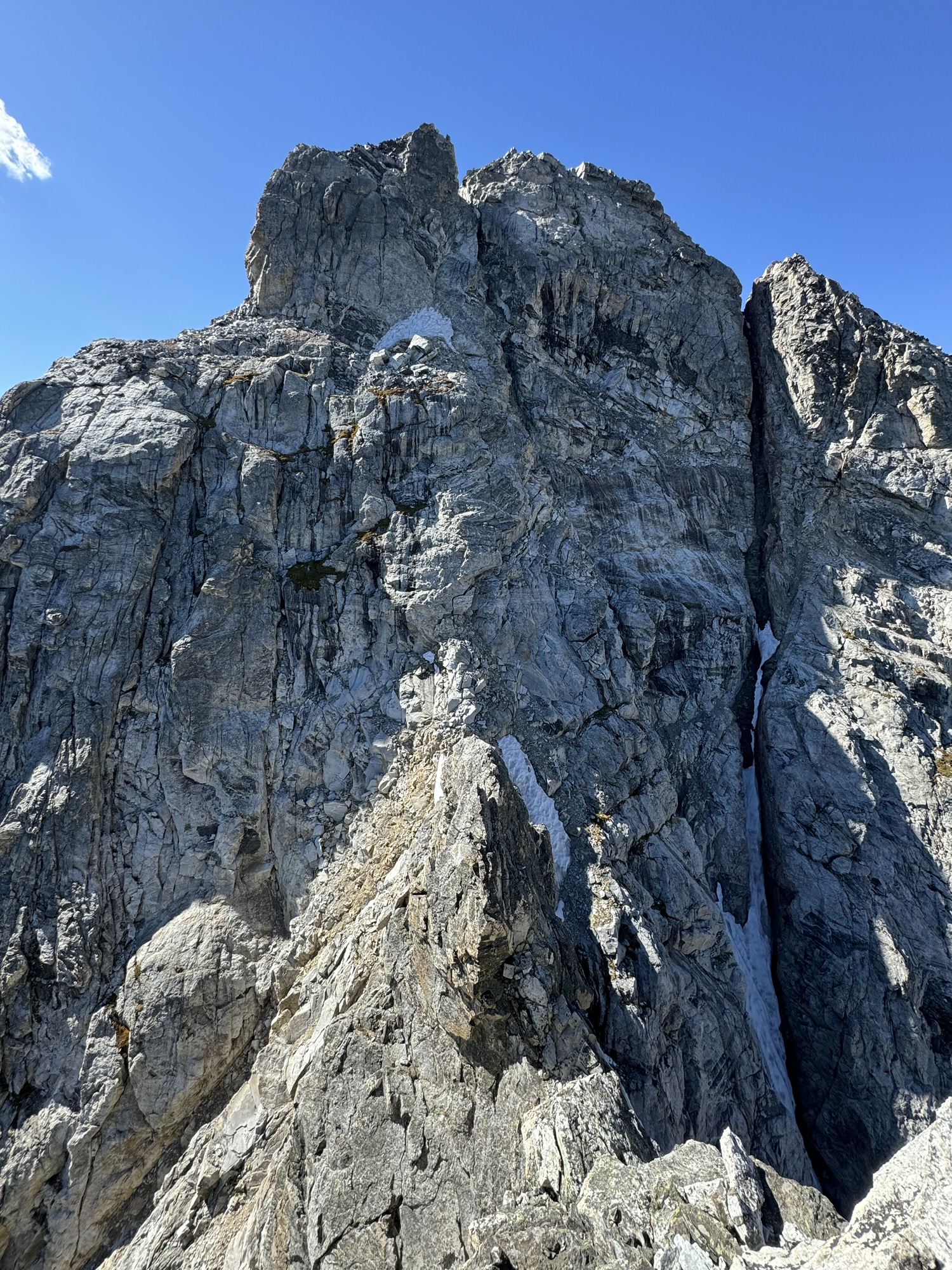
The route finding on the East Face was harder than I expected, and I won’t be able to describe it very well here. However, I will make note of a few pointers; the first is that the correct route is a genuine 5.4/5.5, and if it feels as hard or harder than what you just did on the Black Dike, keep looking (this was my philosophy and it steered me well). Second, I got stuck on one portion that led me to a robust rappel/ belay anchor just under a disheartening lip. I tried to make the move over the lip, getting close and pulling back for a good 20 minutes before giving up. it seemed logical that this was the way up due to position of the bolt *below* the lip instead of above, but I decided to downclimb the slab a bit and wrap around north to the side of the face that I couldn’t see. And alas, there was an easier way. So don’t be fooled by the anchor.
I topped out on the Middle around 7pm, 8 hours into the day. Then descended the southwest couloir and back to the car for RT of 11 hours.

 bruh
bruh 